
 Schweiz
Ambri Airport: History, Aviation and Visitor Information
Martin Andreas K. Facts checked Jonas Felix H.
Ambri is a former Swiss Airforce airbase, built during WWII and dismissed in 1994. It was home of the Fighter Squadron 8, who was flying C35 - Morane - Messerschmitt ME 109 - Mustang - Vampire DH100 - Venom DH 112 and Hunter MK58. Located in the middle of the Alps, it was considered one of the "rockiest" airports of the Airforce. Its runway, 3300 ft a.s.l, is 7000 ft long and surrounded by 8000 ft tall mountains. All fighters , troops and tactical buildings were located in the bunkers underneath the mountains.
Current Status of Ambri Airport
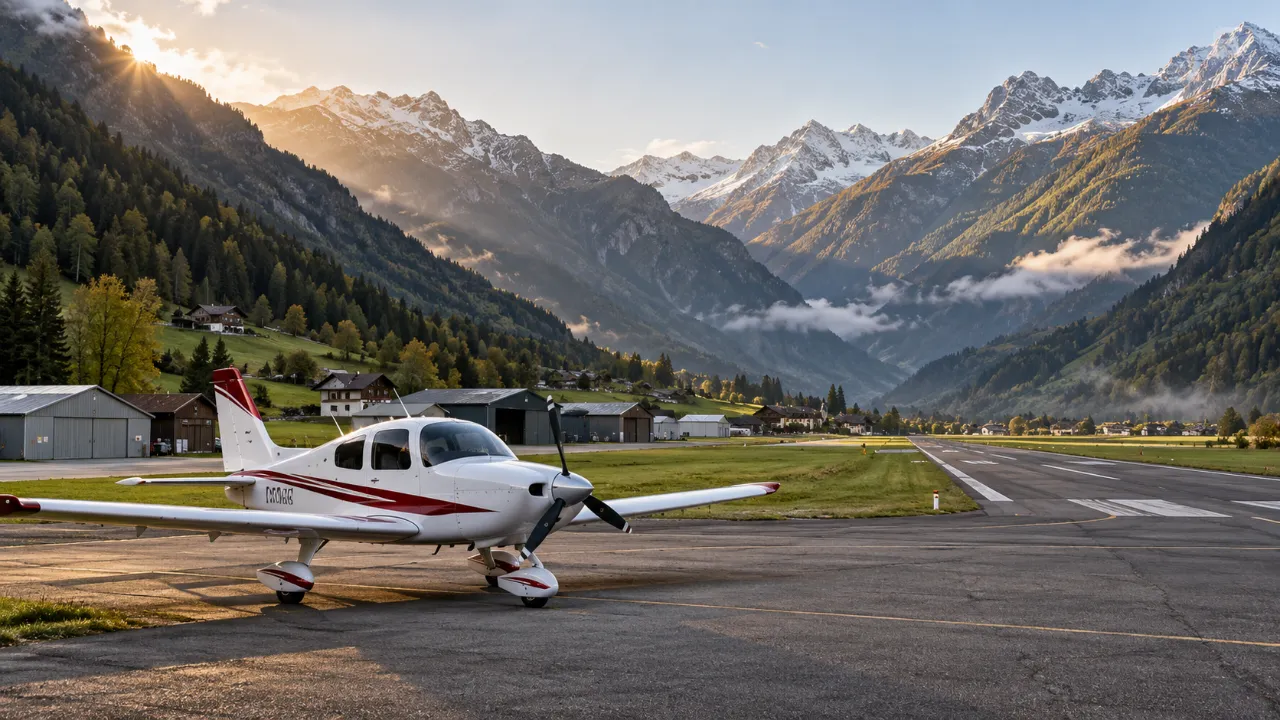
Ambri Airport (ICAO: LSPM), located in the Leventina Valley in Switzerland’s Ticino canton, remains available for general aviation under specific operating conditions. According to the airport’s published information, it is usually open subject to current NOTAMs and prior permission, so pilots should confirm the latest operational status before planning a flight. However, Switzerland’s Federal Office of Civil Aviation still lists the site as an airfield whose conversion to civilian use has not been fully finalised, with an appeal pending.
The airport’s setting in an Alpine valley makes it distinctive, but also requires careful flight planning. Surrounded by high mountains, it demands attention to terrain, weather, visibility and approach procedures. Pilots should consult current official aeronautical information rather than relying solely on general descriptions of the airfield.
Current Conditions for Using Ambri Airport
Arrivals require prior permission (PPR), which must be requested from the airport before the flight. Pilots should check the latest NOTAMs and published procedures, confirm the applicable landing arrangements, and use the designated aerodrome information frequency. Key operational details include:
- ICAO code: LSPM
- Runway: 10/28
- Runway dimensions: approximately 1,245 × 40 metres
- Surface: asphalt
- Aerodrome information frequency: 118.530 MHz
- Prior permission: required
The runway lies at roughly 1,000 metres above sea level and is surrounded by steep Alpine terrain. Its displaced threshold and specific landing procedures must be taken into account, while the airport’s published information states that the taxiway is no longer available and that backtracking is required.
! Before planning your flight, please check the latest runway instructions, operational restrictions and other relevant aerodrome information.
Ambri Airport Infrastructure
Ambri Airport provides basic facilities for visiting pilots and general aviation users rather than the extensive passenger services found at major commercial airports. The airport offers aircraft parking, with the designated parking area located in front of the C office near Hangar 5. Free parking is listed in the airport’s published information, while landing fees depend on the aircraft’s weight.
Hangar space can be requested, and the airport also accommodates flying camps and gliding camps. Pilots should note that fuel is not available at the airfield according to the published information for the 2026 Fly & Grill event, so fuel requirements should be arranged in advance and confirmed with the airport before departure. Facilities and services in the surrounding area include:
- Public transport: bus and train connections are approximately 10 minutes from the airfield.
- Taxis: local taxi services provide transfers to nearby towns and accommodation.
- Accommodation: hotels and other lodging options are available in the wider Leventina Valley.
- Sports and leisure: the Gotthard Arena and the region’s hiking and mountain attractions offer activities beyond aviation.
- Mountain excursions: the Airolo cable car and nearby Alpine destinations provide access to scenic outdoor areas.
The surrounding region offers practical options for pilots and visitors who need transport, accommodation or leisure activities during their stay. Ambri’s location in the Leventina Valley also makes it a useful starting point for exploring the Gotthard area, although travel times depend on the destination and transport available. Visitors should arrange transfers in advance if they are travelling outside regular public transport hours.
Overall, Ambri Airport is a specialised Alpine airfield best suited to pilots who are prepared for its operational requirements and limited on-site services. Checking the latest NOTAMs, obtaining prior permission and planning fuel, transport and accommodation ahead of time are essential steps for a smooth visit.